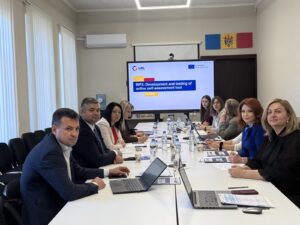
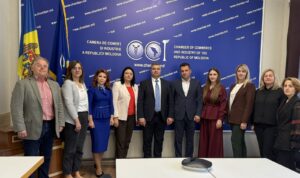
On 29–30 September 2026, the transnational meeting of the WBL-Quality MD – Erasmus+ Moldova project partners took place in Chișinău, bringing together representatives of partner organisations from the Republic of Moldova — the Center of Excellence in Viticulture and Winemaking in Chișinău and Vocational School No. 6, Chișinău — as well as international partners IHK-Projektgesellschaft mbH Ostbrandenburg (Germany) and Verein Auxilium (Austria).
Over the course of two days, the partners reviewed the progress of the project and the results of the research on qualitative and quantitative indicators, discussed the next stages of implementation, and clarified responsibilities for the upcoming period.
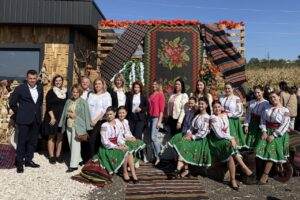
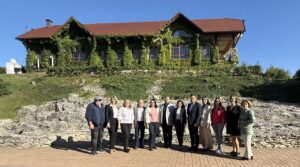
An important part of the visit was the opportunity to explore concrete examples of dual education in the Republic of Moldova. The international partners visited the Center of Excellence in Viticulture and Winemaking in Chișinău, as well as companies involved in dual vocational education and training, including Château Vartely, “Bucuria” S.A., and Eco Resort Butuceni SRL. They had the opportunity to learn more about how students’ practical training is organised and how cooperation between educational institutions and companies is structured.
The meeting also addressed the development and testing of the online self-assessment tool, project quality management and assurance, as well as dissemination activities and the use of project results.
The meeting concluded with agreement on the next steps, responsibilities, and joint actions, further strengthening cooperation among the partners to develop tools and solutions that contribute to improving the quality of Work-Based Learning (WBL) in the Republic of Moldova.